Little Cheung (1999) |
|
 |
Written
& directed by: Fruit Chan
|
Nominations
at the Hong Kong Film Awards 2000: Coming to a close now with his theme of the 1997 Handover with Little Cheung, writer/director Fruit Chan has examined characters in different stages of development during the times leading up to July 1st 1997. Made In Hong Kong presented teenagers in aimless state of being, The Longest Summer adults who were abandoned in the change and now in Little Cheung, the very last rays of innocence gets the spotlight, the children. As expected by now, Chan provides a somber portrayal of Hong Kong but nonetheless an entry that complements the former two and stands on its own, splendidly so. Spring 1997. 9 year old Little Cheung (Yiu Yuet-Ming) and his family runs a restaurant, frequently hassled by triad David (Robin Lau, billed here as Robby). One day Cheung spots Fan (Mak Wai-Fan) while she's applying for a delivery job. He follows her to find out where she and her family lives, which turns out to be in the back alleys of Hong Kong, as illegal immigrants from China. Cheung has learned that money is important, and together with Fan he starts delivering dishes, putting money into his and her own pocket without his family's knowledge. That is soon about to be disrupted, in a time where the Hong Kong people are especially on the edge...
Little Cheung does contain a number of tangents, some incidental, some featuring stronger thematics such as the importance of obtaining money during this time, but Chan settles on focusing on one very other crucial aspect; the importance and value of uniting, both from a larger perspective and within the individual families. Using real life Peking Opera actor Tang Wing Cheung's (or Brother Cheung as he's commonly referred to throughout) sickness and eventual demise during Spring 1997 as a backdrop of hope, Chan gives us more or less a rollercoaster ride of emotions in what really is a drama-comedy. It's both a sweet, simple movie about friendship between locals and ethnic minorities, comes with a Farrelly Brothers gag that is executed with aplomb probably 10 times but set against the serious and touching backdrop of the forthcoming July 1st. Chan was never afraid before to let happy emotions crumble into heartbreaking ones but despite a stuffed 2 hours, Little Cheung is a superb culmination of a Fruit Chan pouring much of his heart onto the screen about the world around him and a honing of filmmaking skills. While much of the opening 30-40 minutes feels incidental, his focus on characters come through despite that. Leading the pack is of course the friendship between Little Cheung and Fan. They're really Chan's perfect images of innocence still brewing even though they, Cheung especially, have had imprinted the idea of money gets you somewhere already at the age of nine. As his narration goes, "me and Fan met because of money", but Chan gives us a simple, touching portrait of these innocent, mischievous, and nonjudgmental children. What they can achieve in the face of the Handover is not clear but one thing's for certain if you know what Chan has given you prior, in particular in The Longest Summer, there are no comfortable answers here. Even Cheung's quest to unite with his outcast brother Hang (Tsui Tin-Yau in his feature debut) fits in well with the entire picture. Chan's handling of melodrama is in reality rather forced, especially with the choosen music cues by Lam Wah Chuen and Chu Hing-Cheung but the fact is that this comes well-deserved as we've come to familiarize ourselves with the themes, the trials and tribulations of the characters. Especially the rarely outspoken and subtle relationship between the Filipino maid Armi (Armi Andres) and Little Cheung.
Little Cheung was lensed independently and on a small budget which allows Chan to, as also is expected, to take his time to hook us either 1 hour in or after the 2 hours are over. Which probably means the masses of general fans of Hong Kong cinema probably need not to take a look as Little Cheung lives by its own rules of pacing, which is absolutely fine by me as long as there's something to pick up on during or by the end. Both those truths accompanies Chan's film. Working with Lam Wah Chuen (who provides both photography and music), the style is suitably gritty and free for all due to a few circumstances. Chan went with an amateur cast and as with a similar effort in that vein, Lawrence Lau's Gimme Gimme, you must give the performers less restrictions in terms of specifically hitting marks and conducting yourself as a trained professional. The feel is therefore hands-off, laid back and even allows for mistakes. But it's obviously not a choice due to necessity. To produce real results, you have to be real, and the team of Chan and Lam achieves nigh on spot on results in terms of that. Camera is often distanced, given the people a large frame to work in and visual style is used sparsely, an indulgement that comes deserved as well.
Obviously you can't brush over the casting of Little Cheung himself, the little lead Yiu Yuet-Ming, who deservedly received a Golden Horse Award for his performance here. Another discovery of Fruit Chan's, who most likely spends all his downtime between movies on the Hong Kong streets, searching for potential talent, Yiu not only proves capable of anchoring the film, but is such a wonderful natural talent. Not necessarily a wonderful natural actor, but a natural re-actor. Yiu brings both the needed playfulness and innocence to Cheung but excels equally with his funny and emotional sides. His co-star Mak Wai-Fan is by writing more held back but she shares excellent chemistry with Yiu by being a simple thing; a kid. The scene when they're eating cake is probably the grandest example of this as they seem to have shut out all notions of being filmed, having already received a large space by Lam Wah Chuen to work with. Gary Lai (who also appeared in The Longest Summer) does well also as the strict father, a behavior having much to do with the timeline, and Robin Lau surprises as David the hoodlum who takes a lot of punishment throughout as the recipient of the Farrelly Brother's joke I told you about. Let me just say that Little Cheung will do with lemonade tea what The Untold Story did with dumplings (which ties in nicely with Fruit Chan's latest, his contribution to the horror anthology Three...Extremes called Dumplings). Jo Kuk briefly appears and the surprise cameos towards the end will prove to be rewarding for those of who have followed the 1997 trilogy.
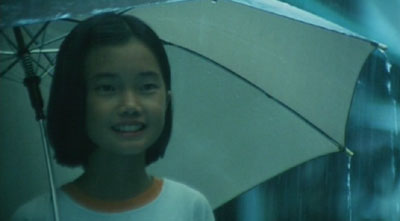
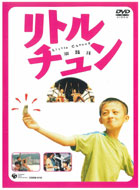
Little Cheung will do nothing for the large masses who were hoping Fruit Chan would try on something more conventional. He closes his views and stories of Hong Kong facing great change via the 1997 Handover in a splendid way in this sweet, touching, heartbreaking and naturally acted tale, taking place right smack in the middle of Chan's reality, urban Hong Kong. It's a farewell to innocence in a rather downbeat manner but it's still truly compelling filmmaking by a visionary still active in the best of ways in Hong Kong cinema, despite living in the aftermath of July 1st. The DVD: Little Cheung has not had an easy time on dvd. Korea put out an English subtitled edition but that, as well as the French disc sans English subtitles, reportedly only provides a full screen presentation. The dvd up for review is the Japanese one by Columbia Music Entertainment that presents the film in a 1.78:1 framed anamorphically enhanced aspect ratio. The print sourced has damage at a few points but remains clean otherwise. The gritty look obviously won't produce sparkling results on dvd but the apparent choosen washed out, greenish colour scheme is well presented. Negatives comes in the form of slight grain, long shots register a bit soft and artifacts crop up around edges during a few moments. By comparison, Asia Video Publishing's Hong Kong vcd leans more towards natural tones but seems too red. It is also slightly cropped all round (mainly left and right) compared to Columbia's dvd.
(Columbia Japan dvd top, AVP Hong Kong vcd bottom) The original language track, containing mainly Cantonese but with slight English dialogue from time to time, is presented in Dolby Digital 2.0. Staying centered all the time, the sync sound recording is obviously rough originally but sounds as clear as you can expect. A Japanese 2.0 dub is also included. Now, here's where I want you to listen up. Columbia's dvd comes with optional Japanese subtitles only but working off the existing English subtitles available online, I was able to, through the purchase of a dvd-burner AND the original disc, re-author the dvd with optional English subtitles. The timing was often catastrophic in the original fan subtitles, plus a chunk of dialogue was missing for the opening moments of the film (Thanks to Matt for providing the missing dialogue and the vcd grab above). I have made sure these subtitles now are timed to this particular dvd (save for 3-4 moments where they're still slightly off) and done a spell check to the best of my abilities. So what I highly encourage you to do, despite the high price tag on the Japanese dvd, acquire the original, a dvd-burner and re-author the disc for your own personal use. The translation is otherwise very good, with little grammar and structure error and is probably transcribed from the original subtitles created for the Hong Kong cinema release. There is some dialogue missing compared to the Hong Kong vcd however. At the 70 minute mark approximately, during the dinner scene with Fan's family, we hear Mr. Gin knocking on the door to ask the whereabouts of Little Cheung. The following three lines are cut out but retained on the Hong Kong vcd: -
I was told that my son and your daughter are friends. I would
like to talk to her. Extras include a 12 minute Fruit Chan interview but comes with permanent Japanese subtitles only plus Japanese cinema trailers for Made In Hong Kong, The Longest Summer and 2 different trailers for Little Cheung (the latter featuring deleted footage and outtakes with Yiu Yuet-Ming). reviewed by Kenneth Brorsson
|
|