| # A B C D E F G H I J K L M N O P Q R S T U V W X Y Z |
| Page 01 | Page 02 | Page 03 | Page 04 | Page 05 | Page 06 | Page 07 | Page 08 | Page 09 | Page 10 | Page 11 | Page 12 | Page 13 | Page 14 |
| The Delinquent (1973) Directed by: Chang Cheh & Kuei Chih-Hung |
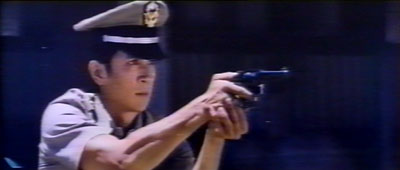
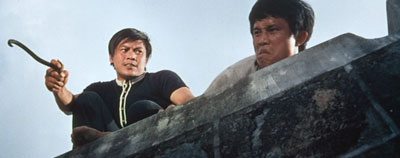
A on the wrong track type of story orchestrated by Chang Cheh and Kuei Chih-Hung. True to form around this time in the 70s, Chang Cheh was letting upcoming filmmakers share the directing chair (including Paoi Hsueh-Li and a young John Woo was Chang Cheh’s assistant director for a time. An experience that he took with him as he developed his voice and themes) and Kuei Chih-Hung would mold himself into a maker of the dark, gritty, sleazy and wildly gross across the 70s and 80s with movies such as The Bamboo House Of Dolls, The Teahouse, The Killer Snakes and The Boxer’s Omen). Starring Wong Chung (also getting a chance at a lead role after walking dependently alongside actors David Chiang and Ti Lung in many of Chang Cheh’s films. Although seemingly this and Police Force quickly started and concluded that leading man experiment) in a template about an aimless youth getting seduced, used and abused by the criminal wealth. It all ends up being bloody and pessimistic of course. Thanks to having Kuei Chih-Hung on board as co-director, The Delinquent is infused with grit (elevated hugely thanks to location shooting) and primal violence I'm pretty sure Chang Cheh couldn't provide on his own. He seemingly let the new kid use HIS eye, making him a good mentor in the process. Featuring messy brawls and action therefore (by Chang Cheh regulars Lau Kar-Leung and Tong Kai) and being very un-Chang Cheh in feel, The Delinquent goes for violent effect through its basic story very well and Chang Cheh would elevate this further on his own in take on seduction by wealth in 1975's Disciples Of Shaolin. Some aggressive camera work (a lot of compelling handheld work is present here) and style enhances while some zoom-moments are a little excessive but nothing that reduces impact along the way. Also with Dean Shek, Fan Mei-Sheng, Lily Li, Betty Pei Ti and Lo Dik. Released in America as Street Gangs Of Hong Kong. |
| Demoness From Thousand Years (1991) Directed by: Jeng Wing-Chiu |
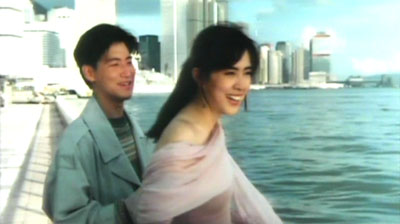
Flying fairy Yun Yuk Yi (Joey Wong) and her assistant Siu Yi (Gloria Yip) battle against Evil (Meg Lam) as she's killed their master. In the aftermath of this particular battle, Yun Yuk Yi is along with her opponent transported to the modern era. Here she meets and shacks up with womanizing cop Mambo (Jacky Cheung) but love is soon in the air as well as more magic battles... A pre-credits sequence set in the supernatural netherworld gives the impression that few out of the crew and cast have their heart invested in this film. With one hand creating wirework and animation, the other quickly gets busy being craaaaazy and wacky once we switch settings. To more than an unbearable degree, director Jeng Wing-Chiu gives us clownish triads and pretty much retarded cops around the character of Mambo. All while Jeng tries to play up this nonsense comedy stylistically also but there's no talent to add sparks to this choice. When Hsiao Ho enters as the spirit master destined to provide answers about how you battle Evil, you at least get a worthwhile cartoon side to Demoness From Thousand Years... literally. Often calling upon the King Of Hell for advice, that being is manifested as a wonderfully insane looking cartoon character. It adds a little dedication to the proceedings and the Zu: Warriors From The Magic Mountain style ending contains better action directing by Hsiao Ho. But as yet another love story about man and spirit plays out, Demoness From Thousand Years early and forever seals its fate as an emulation of other emulations. Also with Andy Hui, Fennie Yuen and Ku Feng. Buy the DVD at: |
| The Demon's Baby (1998) Directed by: Kant Leung |
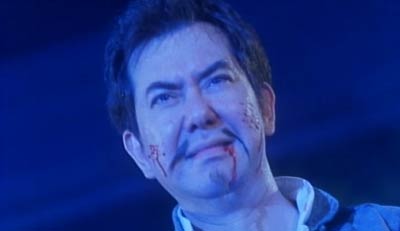
Mix a little bit of Night Of The Living Dead with not so subtle nods to Alien an you have this Wong Jing produced b-movie. Now, I'm a fan of hokey movies, preferably those from Hong Kong that manages to be very energetic and creative on modest budgets. The Demon's Baby should've come out at least 4 years earlier though because then, this is my feeling anyway, the filmmakers could've made sure that the audience would've had a good time at least. Instead, in 1998, the film has virtually no spark or fun. The quote unquote horror happens quite late in the film and while there's plenty of imagery to win us over with, it's clear that no one really had it in them to assault the audience like a director would've earlier in the 90s. The cast look lifeless but Anthony Wong's cameo is fun for the moment. Too bad the movie wasn't just that. As a sidenote, The Demon's Baby actually could've benefited from the Wong Jing humour but it seems, in 1998 anyway, that he was trying to produce straight, serious movies. In this case, it doesn't really work and another example is A Chinese Torture Chamber Story II produced the same year. Buy the DVD at: |
| Desire (1987) Directed by: Ho Fan |
Recurring actress in 70s and 80s Taiwan melodrama, Shirley Lui decides to bare it all (yes, that does mean nudity) in this rather ineffective drama. She plays Daisy who has a tendency to be drawn to and draw attention from bad men. Men like Fan who takes her virginity but never goes through on his promise to marry her. Instead, it's off to the next girl. And with another wolf out there to get Daisy, the character of Shek who doesn't consider marriage should stop one from sleeping with others, the marriage to timid Dr. Kong (Jonathan Lee, also a composer on the likes of Princess D) doesn't signal safety for Daisy. Desire screws with you, both males and females. Something which is the strongest thought in Ho Fan's direction as Daisy naturally feels guilt and believes fate has dealt her this hand. But intelligence stops there as the idiotic characters of the piece, the horny males, becomes increasingly sillier as they portray desire on a deeper level. All culminating in a car race. Oh boy. I think Shirley Lui deserved a little bit better and genuine artist Ho Fan (mainly in Yu Pui Tsuen) nearly desperately tries to make visual art of his smut. Doesn't quite work outside of the period arena. Released as The Lock of Hearts on Ocean Shores laserdisc. |
| The Desperados (1980) Directed by: Directed by Wong Hei-Dak |
The desperate plight of the literally poor Mainland Chinese immigrants gets a spotlight but the crude dramatic treatment here makes one appreciate Long Arm Of The Law so much more. It's tragic fates galore, led by a pouting Kenny Bee as Cheng who goes through being a prison bitch, being disliked by his relatives and on top if it all, has a girlfriend who has to chose abortion. Uplifting stuff and the reasoning for all this that leads to criminal action is inane and basic. The film contains some raw power in the violent sections but its aim is still to be a valid drama and you don't get anywhere with the sledgehammer making one. The Ocean Shores vcd contains two endings to the film. First the Mandarin dubbed Mainland Chinese one plays out followed by the more immoral and inconclusive (meaning one character gets away) Hong Kong coda. Wong Man, Ho Pak-Kwong and Walter Tso also appear. Buy the VCD at: |
| The Desperate Chase (1971) Directed by: Kao Pao-Shu |
Jimmy Wang Yu is Lung Tai (or The White Dragon) who's gained a reputation as a top spear fighter. When stopping a bunch of the emperor's henchmen bullying young beggar Ni Chiu (Yau Lung), he finds out Ni Chiu is carrying a namelist of rebels opposing the ruling emperor. Bringing it to its destined owner, it turns out the leading rebel is the son of a fighter Lung Tai disgraced once to the point of suicide. But what matters most? Personal revenge or fighting for the well being of the people? And the troops are closing in... By female director Kao Pao-Shu comes a surprisingly intelligent genre excursion. Never complicating the drama as The Desperate Chase lives and breathes via its frequent fight scenes, it's nevertheless entirely engrossing the journey's on display. Lung Tai has a chance to break his cycle of violence and make a serious, heroic contribution. A journey carried very well within Jimmy Wang Yu while he also with a spear in his hand never misses a beat in providing trademark/requisite fury. Of note is the terrific finale where Jimmy goes toe to toe with multiple henchmen and elite warriors with sneaky weaponry. The heroism of The Desperate Chase resonates here. That's such an important key. Released in America as Blood Of The Dragon and sporting, for the genre, a well-performed dub job but an awful re-score by Flood. Also with Wang Yu's One-Armed Swordsman co-star Chiao Chiao and Taiwan martial arts cinema token baddie Lung Fei (who's taken down to earth a few notches here). |
| Desperate Desperados (1984) Directed by: Lousipher Lai |
While I know IFD used to make up their credits, this is the flick blessed with the most "creative" thinking in that regard (look at the name of the director above!) and for maybe half a flick, Desperate Desperados (which is just a production IFD provided a dub for) is a goofy dub experience on wheels. After a while it falls and breaks its jaw however. Presumably shot in Taiwan as it stars O Chun-Hung as a veteran police officer and mentor, he dispenses advice to rookie Benny who is in conflict with his elder brother about how to conduct yourself in the name of the law. Lessons will be learnt and blood spilt as the Black Dragon gang case lands on their desks. Straight, basic and totally ordinary, the original flick clearly would never be a standout so IFD decided to dub the hell out of it to at least generate the chuckles. They do in combination with basic story coherency but around the halfway mark ordinary turns incoherent and confusing is not even beginning to describe matters. Not even the most awkward dialogue in the dub can remedy that although I have to say the dubbers occasionally seems to want to match the exaggerated, wacky performers on-screen... for once. |
| Detective Chinatown (2015, Chen Si-Cheng) |
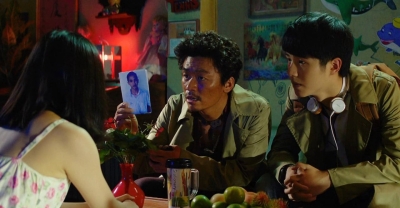
Tin Ren (Wang Bao-Qiang - Kung Fu Jungle) needs to clear himself of a murder charge and who better to team up with to untangle the mystery than distant cousin, police college reject and essentially young Sherlock Holmes Qin Feng (Liu Hao-Ran). A bloated movie in many ways, with its fancy location shooting in Thailand, a way too generous running time of 135 minutes and a wildly overacting Wang Bao-Qiang, Detective Chinatown turns itself into a tough sell early and never really recovers. It gains some momentum as it occupies itself with the mystery, branding our duo as a team of opposites, a few chase sequences rely on Wang's physicality without resorting to kung fu but momentum is never really achieved other than in bursts. We'll take whatever moments we can find when Tin Fen isn't the high pitched clown but director Chen Si-Cheng still has rather massive trouble making the duo, the farce, slapstick and even darkness stick. The excessive 135 minutes gives way to a massive plot that even when explained and visualized comes off as unnecessarily complex and impersonal. It's a movie that's allowed to be way too much on all fronts when a tighter, more subdued tone would have generated a more memorable double act for starters. Followed by a massively successful sequel set in New York. Also with Tong Li-Ya (Wild City) and Michael Chen. |
| Detective Dee And The Mystery Of The Phantom Flame (2010, Tsui Hark) |
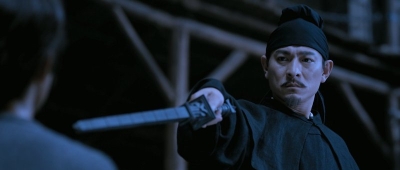
Not that Tsui Hark needs to impress us anymore after setting the tone for special effects in Hong Kong movies with Zu: Warriors From The Magic Mountain and leading a kung-fu revival with Once Upon A Time In China but he’s still working on new content and formulas. And before 2010, the output had not been clicking largely. Producing a grand costume epic here mixed with a rather familiar and relatable murder-mystery story structure should make those not receptive to this chosen style of visual filmmaking more receptive however. With Detective Dee, mostly following it as a mystery and visual spectacle despite distant characters is enough for a good time with commercial filmmaking. There’s plenty of imagination visually, engaging setpieces but there is a tint here of modern style that Tsui Hark isn’t able to make his own. Therefore a good amount isn’t captured well in the cinematography and the heavy reliance on computer imagery paints more of a cartoony picture (the fight with the deers is abysmal looking) than that of transferring the audience to a fantastical world. But despite its running time, Tsui Hark keeps a good pace, there’s enough starpower added, with Andy Lau in the lead, to ease us into the ride it ultimately is but impactful it certainly isn’t. More so than most of the Tsui Hark movies just prior but there’s no new wave in the making here. Also with Carina Lau, Li Bing Bing, Tony Leung Ka-Fai, Deng Shao, Teddy Robin and Richard Ng. |
| Devil And Angel (1973) Directed by: Lo Lieh |
Shaw Brothers star Lo Lieh's directorial debut, Devil And Angel is simplicity itself. Lo Lieh wants revenge on former partners in crime (Wu Ma, Tien Feng, Fong Yau among others) after having served a prison sentence. Bashing and brutality ensues. All with his girlfriend (Grace Tong) by his side. Seemingly shot entirely on locations, the wafer thin and threadbare scenario isn't akin to painful attempt at quality. Lo Lieh gets us in an out quickly (the movie is below 80 minutes) and although some footage at the races, mahjong parlor and various chase footage is padding, Devil And Angel does make its point via mostly hard hitting action with often recognizable, favourite faces quickly in and out as well. Examples of that: Michael Chan, Tai Bo, Billy Chan and Fung Hak-On stop by. |
| Page 01 | Page 02 | Page 03 | Page 04 | Page 05 | Page 06 | Page 07 | Page 08 | Page 09 | Page 10 | Page 11 | Page 12 | Page 13 | Page 14 |
| BACK TO TOP |