| # A B C D E F G H I J K L M N O P Q R S T U V W X Y Z |
| Page 01 | Page 02 | Page 03 | Page 04 | Page 05 | Page 06 | Page 07 | Page 08 | Page 09 | Page 10 | Page 11 | Page 12 | Page 13 | Page 14 | Page 15 | Page 16 | Page 17 | Page 18 | Page 19 | Page 20 | Page 21 |
| Sister Cupid (1987) Directed by: Guy Lai |
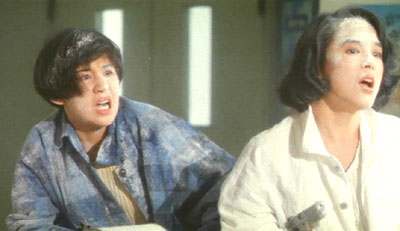
KENNETH'S REVIEW: Not as lifeless as Guy Lai's The Intellectual Trio but pretty damn close. At least it opens in an original fashion during what appears to be a breaking and entering but Pat Ha's Jenny isn't very good at it. Her plan is to elope with boyfriend Cheung (Jacky Cheung) but trying to stand in the way is his sister Kam (Carol Cheng). And when an old lady wants these people to be involved as she marries of her dead daughter, things take drastic turns. As the ghost of the daughter (embodied by Maggie Cheung) becomes visible, the marriage appears to have been done between her and Cheung. Enter rivalry... Annoying pretty much until Maggie Cheung arrives in all her cute glory, as the comedic jabs takes place such as Pat Ha and Carol Cheng exchanging bust-jokes and Nat Chan appearing only mildly annoying, Guy Lai manages to trust Maggie Cheung to make matters bearable because nothing is otherwise funny. Criminally simple to direct her in this way. |
| Sisters In Law (1991) Directed by: Andy Chin |
Reasonably entertaining buddy cop cop comedy (the pairing this time is Sandra Ng and Charine Chan) from Andy Chin (Changing Partner) who usually makes reasonably entertaining films. No different here as comedy is kept unusually light (meaning not Wong Jing-esque broad outside of the Michael Chow cop character and his partner, but Michael is a pretty funny guy though) and plays to Sandra Ng's strength as an amusing comic actress. Tony Leung Siu Hung handles the action competently, giving us gritty and bloody gunplay that makes Sisters In Law a fair early 90s package. Shing Fui On and Max Mok are good in supporting roles. Megastar does their best to ruin the movie with a horrendous 5.1 remix though. Buy the DVD at: |
| Sisters Of The World Unite (1991) Directed by: Maisy Choi |
Sylvia (Sylvia Chang, also producer and co-writer) in a distraught mood about not feeling the attention and love from her husband (John Shum) anymore, shacks up with sister Sally (Sally Yeh in her last Hong movie). Sally herself is in a risky relationship with married man Johnny (Derek Yee) and decides ultimately to split up with him. Re-examining their roles in and view on love while being re-born again, Sylvia's true beauty will come out while she gets a breakthrough as a cook and Sally meets younger man Ray (David Wu) who literally drains all energy out of her. Being an environmentalist and never in shortage of things to do, it's the inevitable age clash that may threaten this blooming love. One time director Maisy Chow has a loveable structure and themes running throughout and it's especially heartwarming to see Sylvia's character bloom. Which in itself is the reason to cast Sylvia Chang as she can carry off that transformation from ignored house wife to true beauty and sexiness. Director Chow also thinks of this drama cinematically, going creative on us during her collaboration with cinematographer Jingle Ma. Pace she doesn't master however. In fact not at all. Sisters Of The World Unite seriously drags and engages merely in sporadic bursts, despite all throughout really showcasing its leading ladies well. Featuring cameos and appearances by Johnnie To, Raymond Wong, Kenny Bee, Phillip Chan and Kam Kwok-Leung. |
| Six Assassins (1971) Directed by: Jeng Cheong-Woh |
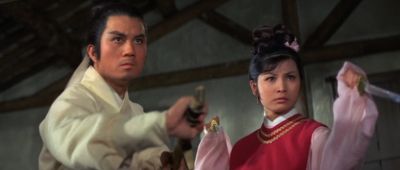
Written and directed by Jeng Cheong-Woh (King Boxer), Six Assassins scores points for brevity and standard (meaning high standard) Shaw Brothers production values but isn't one that lingers. Concerning the team of assassins Mu Jun-Jie (Ling Yun) puts together to take out the brother (Yun Il-Bong) of the emperor, at 79 minutes there's still lots of talk, plot and characters packed into the movie and it can get pretty uninteresting at most points. Latching on to the basic story and a well executed Shaw Brothers frame (as per almost usual) helps as well as at points intense swordplay and Ling Yun bringing an intense presence in the lead. Worth anyone's short time even though you won't remember you spent time with Six Assassins shortly thereafter. Also with Lily Li. |
| The Six Devil Women (1996) Directed by: Tony Ma |
A group of women (including Diana Pang) goes to Mainland China to earn money any way they can. Not surprisingly they end up as prostitutes but their violent pimp (Jimmy Wong - The Fruit Is Swelling) are using them as highway bait to subsequently rob and kill the male victims. A Category III movie where budget works in its favour. With sparse locations (some highways and apartments) and gore budget, you combine a roster of reprehensible characters and acts and you got yourself a fairly gritty, late 90s Category III nasty. It won't turn heads violence-wise but director Tony Ma (Rebekah) achieves a lot by setting tone through locations and character traits. |
| The Six Directions Boxing (1980) Directed by: Tyrone Hsu |
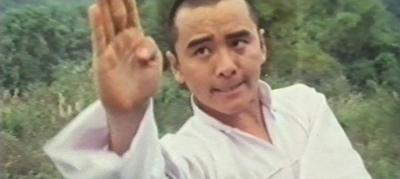
Basic yet overly busy martial arts from Taiwan, The Six Directions Boxing presents a splendid cast (a great looking David Chiang, Paul Chun, Simon Yuen, Yueh Hua etc) but yet it comes off as a product of its time. Meaning it's yet another kung fu picture that was part of the production flow. Leaving your consciousness quickly therefore, within we do get a fairly logical balance between dark and light and part of the Yuen family (Simon Yuen's sons Yuen Yat-Choh, Yuen Cheung-Yan and Brandy Yuen) choreographs some very noteworthy fight scenes. Tyrone Hsu (The Red Phoenix) intends to tell a story clearly rather than shoot a quickie set mainly outside but with such a huge character gallery, even basic matters get muddled. At least there's a monkey to look at. |
| Sketch (1983) Directed by: Wong Ching |
Despite that one too many implausibilities crop up during the final reel and the fact that this really is more of a pedestrian slasher-thriller, curious ones of this new wave of filmmaking and directors should give Stretch a go. Director Wong Ching's proves himself to be very adept at creating atmosphere of dread and set against the village backdrop, the low budget definitely helps to enhance a sense of reality. Strangely enough, he leaves his main social commentary outside of the main narrative and characters. His target are the youths and the anarchy nature to them directed towards a society based so much on respect for your elders. True to form for these new wave of directors back then, there is a pessimistic tone to this. Today, the commentary doesn't seem very polished and rather over the top, but back then, these were new voices of Hong Kong cinema and it's interesting to examine this era. Some directors never really managed to adapt themselves to the changing Hong Kong cinema and subsequently faded away. Buy the VCD at: |
| Skiptrace (2016, Renny Harlin) |
A co-/production hit for Renny Harlin who re-invents nothing within the buddy action-comedy. Then he has to rely on cast and chemistry for this highly familiar ride and in part he gets the tone right. Seemingly not concerned when lining up tropes and familiar plot devices whose developments can be spotted a mile away, Jackie Chan and Johnny Knoxville then take center stage for their action-filled trip from Russia, through Mongolia and China to final destination Hong Kong. One drawback is that Jackie Chan is still performing action he really shouldn't at his age and inspiring creativity is clearly not present (the man has shown us enough ingenious stretches of celluloid by this point). That being said, there are bursts of inspiration such as a gag involving Russian nesting dolls and the younger cast (such as Eve Torres who has a background in Brazilian jiu-jitsu and WWE) come through with snappy, impactful and well timed action. Chan and Knoxville don't connect well as such but the movie does pass the time adequately since the latter in particular is in fine form. Considering it's merely the age old wisecracking sidekick character he's asked to inhabit, his wit is surprisingly effective. There's nothing that breaks open the genre here but a few laughs, good action from supporting cast, a random Adele singalong in an unlikely place geographically gets Harlin enough acceptance. Said acceptance will be forgotten quickly and Jackie Chan should probably think about stepping aside even more in the action department. Co-starring Fan Bingbing. Eric Tsang, Michael Wong, Winston Chao, Kira Shi Shi and Richard Ng appears in a cameo. Film is dedicated to cinematographer Chan Kwok-Hung who drowned in a boat accident during filming. |
| The Skyhawk (1974) Directed by: Chan Cheng Ho |
Kwan Tak-Hing's return to the Wong Fei Hung role, 4 years after the last of long running series had ended with Wong Fei Hung: Bravely Crushing the Fire Formation. Kwan would go on to reprise the role yet again in movies such as The Magnificent Butcher and Dreadnaught. As an anticipated comeback vehicle, The Skyhawk is far from remarkable, containing standard plotting and simple but well-meaning philosophies. It rises to solid thanks to Sammo Hung's action (Hung also co-stars) that partly recalls the style of the era but contains enough of Hung's powerful traits as a choreographer. Whang In-Sik obviously gets a good kicking showcase, Kwan Tak-Hing performs an admirable amount of his own fighting but it's Carter Wong that Hung has blessed with several moments of smoothly executed action. Also with Nora Miao, Lee Kwan and amongst the stunt players Lam Ching Ying and Wilson Tong can be spotted. Buy the VCD at: |
| Sky On Fire (2016, Ringo Lam) |
After an 8 year absence from directing, all of a sudden across 2015 and 2016 the late Ringo Lam cranked out two new action pictures and judging by the action and violence of Sky On Fire, his eye is still welcome in today's modern filmmaking. Gritty Ringo-action in bright and shiny high definition admittedly feels strange however. Although not strong on storytelling as different groups are trying to get hold of life saving stem cell research, there's no subtle plot beats here about greed, profit or any compelling redemption stories spread across characters such as Daniel Wu's chief security officer. It becomes needlessly complex to identify characters, groups, motivations, who they side with but amazingly enough it becomes sufficient to attach to the basic and then watch Sky On Fire for its action and stunts. Ringo's grip on the real, gritty and nihilistic is strong within set pieces often involving car chases in cramped areas, innocents getting in the way and not a lot of it is obviously enhanced with computer graphics. Perhaps not earning its cruel deaths at points, nonetheless effect is achieved via the eye of Ringo's and not from the eye of the persons with the toys that can make modern cinema modern looking. Also starring Joseph Chang, Zhang Jing-Chu, Amber Kuo, Phillip Keung and Zhang Ruo-Yun. |
| Page 01 | Page 02 | Page 03 | Page 04 | Page 05 | Page 06 | Page 07 | Page 08 | Page 09 | Page 10 | Page 11 | Page 12 | Page 13 | Page 14 | Page 15 | Page 16 | Page 17 | Page 18 | Page 19 | Page 20 | Page 21 |
| BACK TO TOP |